Women Political Leaders

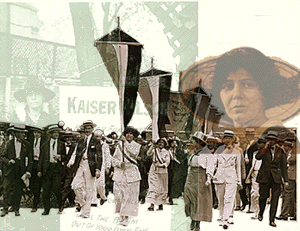
After a successful project documenting women leaders and activists in the suffrage movement, in the 1970s the Oral History Center (then the Regional Oral History Office) began documenting the experiences of California women who became active in politics during the years between the women’s suffrage movement and the feminist movement — roughly 1920 to 1965. This endeavor was called the California Women Political Leaders Oral History Project, and represented a variety of political views from elected and appointed officials at national, state, and local government levels.

Under project director Malca Chall, The California Women Political Leaders Oral History Project was financed by both an outright and a matching grant from the National Endowment for the Humanities. Matching funds were provided by the Rockefeller Foundation for the Helen Gahagan Douglas component of the project, by the Columbia and Fairtree Foundations, and by individuals who were interested in supporting memoirs of their friends and colleagues. In addition, funds from the California State Legislature — sponsoring the Knight-Brown Era Governmental History Project — made it possible to increase the research and broaden the scope of the interviews in which there was a meshing of the woman’s political career with the topics being studied in the Knight-Brown Project. Professors Judith Blake Davis, Albert Lepawsky, and Walton Bean served as principal investigators when the project was active from July 1975 to December 1977.

Several years after these initial interviews, a group of scholars and volunteer interviewers worked together to conduct an oral history with longtime political actor Elizabeth Paschal. The Committee for the Oral History of Elizabeth Paschal donated the resulting interview to the Oral History Center in the 1990s as part of the Women Political Leaders Oral History Project.

See all interviews

U.S. District Court for the Northern District of California

Chief Judge Robert Peckham created the Northern District Court Historical Society in 1977, followed by commissioning this important oral history series in 1980. In the 1981 the preface to the first oral history in the series, that of Judge Albert Wollenberg, Sr., Judge Peckham wrote:

“In addition to historical study of the District, the Society hopes to promote greater public understanding and appreciation of the role of the federal judiciary. Except for those involved in the legal process, the operation, significance and impact of federal trial courts remains largely a mystery to most Americans. By focusing on the history and activities of the Northern District, the Society hopes to bridge this gap between the legal and lay world and even encourage other District courts to initiate similar efforts. As the nation nears the 200 th anniversary of the ratification of the United States Constitution, it is an appropriate time to raise the level of public understanding by placing the contemporary role of district courts in historical perspective.”

These interviews capture the personal and professional lives of the interviewees, as well as the development of the legal profession and the law, and firsthand accounts of political and cultural aspects of the country and international events as lived by the narrators. Interviewers include Oral History Center staff, family members and colleagues of the judges. Additional oral histories with Northern District of California District Court judges can be found on the Northern District Court Historical Society and the Ninth Judicial Circuit Historical Society websites.

Sponsored by the Historical Society of the U.S. District Court for the Northern District of California.

See all interviews

Early Venture Capitalists

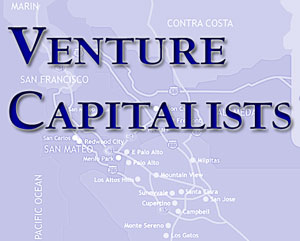
Venture CapitalistsEarly Bay Area Venture Capitalists: Shaping the Business and Industrial Landscape documents through videotaped interviews with the first generation of venture capitalists the origins and evolution of the venture capital industry in California during the 1960s and 1970s. The project explores and explains through the words of participants how venture capital originated in the Bay Area, its intersection with national legislation and policy, the significance of its location, and its role in creating the electronics and biotechnology industries in California.

See all interviews

Related resources

National Venture Capital Association

Western Association of Venture Capitalists

Community and Identity — Individual Interviews

The Oral History Center’s Community and Identity project contains a diverse range of individual oral histories, including interviews that were conducted during the first years of the OHC’s own history in the 1950s. The stories narrated in these interviews begin as far back as the late 19th century, and the project also contains a number of donated interviews and memoirs. Twentieth-century Russian and Hungarian communities are particularly well-represented in this project. Topics covered include war and military service, politics and communism, San Francisco culture, business, education, religious leadership and community life, law, and University of California history.

See all interviews

California Fire Departments

The California Fire Departments oral history project was originally conceived by Sarah Wheelock, an independent researcher. She wanted to explore several major thematic areas of firefighting in California, and she worked with the Oral History Center as her fiscal sponsor and institutional home. Sarah Wheelock passed away in 2014 before she could complete the project and, thus, she was unable to see the project through to completion as originally conceived. Oral History Center staff, led by historian/interviewer Shanna Farrell, assumed management of the project in 2016. Farrell honored the spirit of the original plan and covered the themes outlined by Wheelock, but rather than conduct interviews across the state, Farrell focused on one department, the San Francisco Fire Department (SFFD). The project, then, documented the ways in which a big city department handled urban fire, climate change, diversity, technological change, and changing demographics. Further, the project explored how firefighters work in a complex system that requires constant training and education, a cohesive partnership with local government, extensive procedures and protocols, managerial oversight, effective communication within departments and to the public, acute familiarity with the local and regional environment, and a whole lot of administrative work. The SFFD is an example of how people make a civil service operation run and keep people safe.

The SFFD was founded in 1849 and originally was run by volunteers. It became a paid department, officially integrated into city government, in 1866. The 150th anniversary of the paid department was in 2016, which coincided with the project's interviewing phase. Six people were interviewed for this phase of the project, who worked with the SFFD in different capacities and could offer multiple perspectives on the organizational, cultural, geographic, economic, and political systems of one of the oldest departments in the country. These interviews work in concert to illustrate day-to-day operations in the stations, administrative duties, how the city of San Francisco and the department work together, the relationship between paramedics and the department, training, equipment, fire science school, the role of unions, the challenges and triumphs of integrating the departments, the public perception of the department, the role of innovation and changing technology, cultural changes in the department, challenges in fire safety particular to the geography of San Francisco, and the hopes for the future of the SFFD.

See all interviews

Bioscience and Biotechnology

About the interviews

Below are oral histories in the areas of bioscience and biotechnology. You can search our collection for interviews regarding Amgen, Chiron, Genentech, and any keywords to explore the whole of our collection of science related oral histories. See also the list of related projects. 

See all interviews

Related resources

AIDS Epidemic in San Francisco Oral History Project

Kaiser Permanente Oral History Project

Science, Technology, and Health — Individual Interviews

Kaiser Permanente Medical Care

Photo of Kaiser Permanente buildingThe Kaiser Permanente Medical Care Oral History Project was an in-depth, interview-based research project into many facets of Kaiser Permanente medicine and medical research, medical care delivery, and the politics, business, and economy of medicine in the United States since 1970. Interviews were conducted from 2005 through 2009.

Project team

Richard Cándida Smith, principal investigator
Martin Meeker, project director and interviewer

Funding

This project has been funded by a grant from Kaiser Permanente Foundation Hospitals and Health Plan.

Statement of scholarly independence

Although funded by KP, this project was designed and is being executed as an independent scholarly research project; individual interviewees are covered by UC Berkeley Committee for the Protection of Human Subjects guidelines that provide for sealing portions of interview transcripts at the discretion of the interviewee. While the research design and interviewing are independent of KP, we have been assisted by KP staff in identifying research themes and in selecting and locating potential interviewees.

See all interviews

Project resources

Video excerpts

Managed Care in the 1990s: Politics, Policy, and Oral History Perspectives” archived video
A panel discussion held April 8, 2009 featuring: Alain Enthoven, James Robinson, Martin Meeker, and Richard Candida-Smith, with written remarks by Robin Einhorn.

“The Development of the Electronic Medical Record in Kaiser Permanente” edited video
In this video, Dr. Al Weiland, former director the Northwest Permanente Medical Group, offers an account of how and why electronic medical records emerged from Kaiser Permanente's Northwest Region in the 1990s.

“Dr. Cutting Reflects on the Life and Career of Dr. Sidney Garfield” video excerpt


Project themes

Kaiser Permanente “Core Values”

As KP developed from a prepaid health plan for Kaiser Industry employees to a program available to the broader community, six values defined the practices and culture of the organization:

  1. group practice
  2. integration of facilities
  3. prepayment
  4. preventive medicine
  5. voluntary enrollment or “dual choice”
  6. physician responsibility

These values appeared over and over again in the interviews with KP pioneers. For the founding generation, the values grew directly from the process of developing an innovative health care system that satisfied membership needs for affordable quality medical care. External studies of KP in the 1960s affirmed the practical and financial utility of KP values. KP representatives participated in drafting both the Medicare Act of 1965 and the Health Maintenance Organization (HMO) Act of 1973. In the latter bill, Congress mandated four of KP’s core values (1, 3, 4, and 5) as necessary components of HMOs.

Ironically, even though KP provided the single most important model for legislation designed to cure the growing inadequacies of America’s fee-for-service-based medical system, it, like every other organization, had a difficult time adjusting to a new, more complex environment. Efforts to adapt to the new situation inevitably involved questioning the continued utility of KP’s “genetic code.”

National expansion posed a particularly important set of challenges. The results of national expansion were varied and often traumatic. The ability to transfer KP core values proved an important factor in the relative success or failure of new regions, thus confirming the functional centrality of core values to KP operations. To abandon them altogether seemed a recipe for failure.

Another set of conflicts developed as continuing changes in law as well as intense competition from new HMOs affected the relationship between Health Plan and Medical Group. As the national organization responded with what many viewed as radical departures from the core values that had guided KP for decades, the cumulative experience of KP leaders around the country suggested that however compelling new approaches might seem in light of the new situation, problem-solving strategies had to respect KP’s long-established culture or they would fail.

The story of how KP came to reaffirm its core values is not one of heroes and villains. Radical change swept through American medical care, and no one had a clear vision of what to do. The apparent decision in the late 1990s to reaffirm KP’s “genetic code” was based on its continuing utilitarian value as well as the strong attachment many within the organization had to KP’s heritage.

Business model and the economics of health care

All of the issues that have concerned KP have had to synthesize into a medical economic model that can support the full range of activities required by contract, law, and public expectation. KP has been unique among nonprofit medical organizations in its reliance on self-funding for new facilities and equipment. The challenges of maintaining a viable economic model flexible enough to adapt to a fast-changing environment is an important factor in internal debates over priorities and decision-making processes. A contrast of business practices as they developed across the regions would provide insight into how decentralization helped KP resolve its internal disagreements.

The mutual trust developed between the medical groups and the health plan at the regional level helped lead to the National Partnership Agreement of 1997 and the Path to Recovery Agreement of 2002 after disagreements at the national level had escalated. The trajectory underscores that the history of KP’s economic model needs to include regional perspectives as well as those from the national office. In an organization as complex and large as KP among the questions all administrators have to address are how much can any of the individual organizations with KP be “at risk”? How much can they count on each other for financial assistance if needed and under what terms? The joint decision of the Permanente Federation and the Health Plan to save the Mid-Atlantic region may be a good case study of how collaboration and shared responsibility have come increasingly to underpin KP’s economic model.

Diversity in the workplace and in the provision of health care

In the 1940s, Kaiser hospitals refused to segregate patients on the basis of race. They were often the only hospitals in the local community where black physicians could practice. KP members from the beginnings of the organization have represented a wide range of the populations in the communities KP has served. Its workforce has long been equally diverse. Over the years, the commitment to equality made when KP started developed into a concern to deliver “culturally competent care.” At the same time, the understanding of diversity has expanded from opposition to racial discrimination to engaging and taking full benefit from the full range of human difference comprised by but not limited to culture, religion, gender, sexual preference, physical and mental abilities, or age.

Government relations

The growth of health care as a political issue has been another dramatic development transforming the practice of American medicine. Mandates, regulations, and programs come from the federal and state governments. The courts have become a major player in medical practice as a body of law grows, covering an ever-widening range of issues. Health care and its problems have proven decisive issues in some elections. The citizenry expects quality health care that it can afford, but despite the growing pressure on politicians to expand regulations and entitlements, no consensus has yet developed about how best to organize and pay for the nation’s medical care. All medical providers have moved from a situation in which contractual agreements determined rights and responsibilities to a highly volatile, mixed environment combining contracts, regulation, and new case law.

Health care and the Information Revolution

As Kaiser Permanente grew throughout the 1950s and 1960s, the problem of keeping track of the health status of its members became a central concern across the organization. Because of the unique pre-paid delivery model of Kaiser Permanente, physicians were not rewarded for providing unnecessary treatments; rather, providing only the most effective care became an organizational necessity. But medicine was often more of an art than a science in this era as evidence-based knowledge lagged behind tradition. From this era forward, physicians, researchers, and health plan leaders sought to harness technological innovation in medical devices as well as information systems. In the 1960s, this drive resulted in the accumulation of medical data on the entire membership of Kaiser Permanente—data that has been the basis of hundreds of studies over the past 50 years. By the 1990s, it spurred the creation of Kaiser Permanente’s robust electronic medical record.

Drs. Cutting and Collen showing the multiphasic screening data to visiting dignitaries.

The managed care crisis of the 1990s

By the mid-1970s, Kaiser Permanente was the largest pre-paid, group practice health care delivery system in the United States. Given the growth and apparent success of this delivery model, the federal government passed the Health Maintenance Organization Act in 1973. The goal of this act was to support the expansion HMOs into new regions and states. Although it took many years for this expansion to take place, HMOs had become a popular alternative to conventional fee-for-service medicine and indemnity health insurance by the 1980s. On the one hand, this expansion proved the viability of Kaiser Permanente’s model; on the other hand, the increase meant competition from newer, more flexible HMOs. By the 1990s, HMOs—and, more broadly, “managed care” programs—had expanded broadly but they were also beginning to experience massive growing pains. Many for-profit plans, facing pressure from their stockholders, started to ration care; many plan members, fearful of the rationing of health care, started to criticize these plans, sometimes fleeing them for other options. Managed care was in a crisis. Although much different than many of the large, for-profit managed care organizations, Kaiser Permanente found itself swept up the managed care crisis of the 1990s. Many interviews in this project explore the difficulties experienced by Kaiser Permanente in the 1990s and their efforts to overcome those problems by the end of the decade.

Research at Kaiser Permanente

Kaiser Permanente is one the largest private providers of health care in the United States. However, many do not know that its regions also conduct a great deal of research, focused mostly on health care delivery (rather than basic medical research). In 1961, Dr. Morris Collen established what eventually became the Division of Research in Kaiser’s Northern California Region; in 1964, Dr. Mitch Greenlick established the Center for Health Research in the Northwest Region; research centers in other regions followed. Several interviews in this project explore the content and scope of health services research conducted at various Kaiser Permanente facilities.

Kaiser Permanente before 1970, the founding generation

Interviews with nineteen KP pioneers were conducted in the mid-1980s. Two were added during the 1990s to continue the story of national leadership up to 1992. Twelve interviewees were KP physicians, eleven of whom had served as administrators. Six physicians came from the Northern California region, three were from Southern California, and one each were from the Colorado, Ohio, and Northwest regions. Eight interviewees were Health Plan administrators, three of whom had worked in Kaiser Industries during the formative stages of the Kaiser health plan. One of the other two interviewees was interviewed as a representative KP Health Plan member. A final interview was conducted in 2002 with a pioneer in KP’s nursing program. The interviews range in length from 2 to 16 hours. A total of 162 hours of conversation was recorded and transcribed. More than half the pioneers are now deceased. Their recollections are valuable historical resources that cannot now be replaced or duplicated.

Related resources

Kaiser Permanente

Kaiser Permanente Center for Health Research (Northwest)

Kaiser Permanente Division of Research (Northern California)

National Library of Medicine (NIH), oral history collection

The Permanente Journal

Bay Bridge

About the project

The San Francisco-Oakland Bay Bridge Oral History Project tells the story of this engineering marvel. Enabling billions of passengers to drive from Oakland to San Francisco, or vice versa, since it opened to the public 1936, the Bay Bridge binds together the region like no other man-made structure. The majority of interviewees for this project spent their careers working on and around the bridge, and they offer their perspective on the engineering achievements, the maintenance challenges, and the complex symbolism of this massive structure.

Photo of the Bay Bridge 1936 courtesy of The Bancroft Library
The Oral History Center, or OHC (then the Regional Oral History Office), of The Bancroft Library at the University of California Berkeley, launched a new oral history series on the history of the San Francisco-Oakland Bay Bridge in May 2012. At that time, OHC entered into an agreement with the Oakland Museum of California (OMCA) to conduct approximately 15 oral histories, totaling approximately 30 hours of interviews, on the history of the Bay Bridge, the San Francisco Bay, and bridges in the surrounding region.

This project was a collaboration between OHC, OMCA, the California Department of Transportation (Caltrans), the Bay Area Toll Authority (BATA), and the Metropolitan Transportation Commission (MTC). This project was designed to fulfill the historical mitigation requirements associated with the dismantling of the eastern span of the San Francisco-Oakland Bay Bridge. The series coincided with, and contributed to, the research phase and design phase of an exhibit at OMCA on the social and environmental history of the San Francisco Bay.

Photo of Bay Bridge painter, 1936, courtesy of The Bancroft Library
This project provides a set of resources widely accessible to students, scholars, and the public interested in the San Francisco Bay. Interviews focused on the men and women who spent a good portion of their careers working on the bridge, whether as painters or engineers, toll-takers or architects, labor or management. Beyond the human dimension of the bridges, these structures also connect geographic spaces, providing conceptual linkages between cultures, environments, and political discourses. This oral history project, then, explored the role of the iconic bridges in shaping the identity of the region, as well as their place in architectural, environmental, labor, and political history. This project enhances the historical understanding of the San Francisco Bay and the natural and built environment that helps define the region.

The Bay Bridge Oral History Project launched with an investigation of the history of the bay and the architectural, social, and political history of the bridges that span the waters of the region. Planning meetings attended by representatives of OHC, OMCA, Caltrans, BATA, and MTC began in mid-2011. In these meetings, representatives of the various groups discussed the topics that should be covered in the interviews as well as the kind of people who should be interviewed. Although there were no known individuals who worked on the construction of the Bay Bridge (1934-36) still living, a foremost goal of the project was to document the construction of the bridge and its early years, especially before the bridge was altered in 1959 with the removal of rail tracks on the lower deck. Beyond that initial goal, interviews were sought with individuals who would be able to share unique experiences related to the bridges from a variety of personal and professional vantage points: from laborers involved in maintenance of the bridge through bridge engineers who worked on the design on the new eastern span. The primary focus of this project was to dig deeper into the complex history of the San Francisco-Oakland Bay Bridge and its changing relationship to human communities and the environment.

The project interview staff at OHC (active circa 2012-13) consisted of Sam Redman, Ph.D., and Martin Meeker, Ph.D. The project interviewers were assisted by David Dunham, technical specialist, and Julie Allen, editor.

See all interviews

Project resources

Video excerpts


Museum exhibitions

Peter Stackpole: Bridging the Bay
Exhibition at the Oakland Museum of California.
July 20, 2013 – January 26, 2014

Above and Below: Stories from Our Changing Bay
Exhibition at the Oakland Museum of California
August 31, 2013 – February 23, 2014

The Bay Bridge: A Work in Progress, 1933-1936
Exhibition at the de Young Museum, San Francisco.
February 1, 2014 – June 8, 2014

Media coverage

Radio and television

Martin Meeker interviewed by Pat Thurston on the Ronn Owens Show
KGO-AM Radio
September 5, 2013 11 a.m.

Martin Meeker interviewed by John Hamilton on Up Front (interview begins at about 41:45)
KPFA 94.1 FM
September 3, 2013, 7 a.m.

“Bay Area Woman, 99, Remembers the Before and After of the Bay Bridge Eastern Span”
by Joe Rosato Jr.
NBC Bay Area, August 29, 2013

“Bay Area Historians Gather Stories For Bay Bridge Project”
by Holly Quan
KCBS 740AM San Francisco CBS, August 28, 2013

“The glory that was the original Bay Bridge”
by Steven Short
KALW Crosscurrents 91.7 FM San Francisco, August 21, 2013

“An Oral History of San Francisco's Bay Bridge”
by Julie Caine
WYNC 93.9 FM New York, Tuesday, January 22, 2013

Also featured on the nightly news programs of NBC Bay Area and ABC 7 News.

Print media

“Above and Below: Stories From Our Changing Bay”
by Kimberly Chun
San Francisco Chronicle, September 18, 2013

“Oral History On and Above The Bay Bridge”
by Martin Meeker
Bancroftiana, Summer 2013

“Bay Bridge Memories Sought for Oral History”
by Rob Shea
El Cerrito Patch, July 15, 2012

Celebrating the ‘Workhorse’ Bay Bridge”
by Carolyn Jones
San Francisco Chronicle, July 14, 2012

Bibliography

Photo of the Bay Bridge Tower Constuction 05-13-1935 courtesy of The Bancroft Library

Historic American Engineering Record San Francisco-Oakland Bay Bridge

Construction Photographs of the San Francisco-Oakland Bay Bridge, 1931-1936, BANC PIC 1905.14235-14250--PIC, The Bancroft Library, University of California, Berkeley.

T. Y. Lin, “The Father of Prestressed Concrete”: Teaching Engineers, Bridging Rivers and Borders, 1931 to 1999, an oral history conducted in 1999 by Eleanor Swent, Regional Oral History Office, The Bancroft Library, University of California, Berkeley, 2001.


Western Mining

Western MiningAutoclaveThe Western Mining in the Twentieth Century series of the Regional Oral History Office, documents contemporary events in the most historically important industry of the American West. The series comprises interviews with leaders in mining exploration, production and metallurgical treatment of ores, financing and development of mines, mineral engineering education, state and federal government organizations, and journals of the mineral industries.

Special industry challenges are discussed: mechanization and automation, mining at great depths, protecting the environment, radiation hazards, concern for health and safety. There are eyewitness accounts of the flooding of the Treadwell Mine, the Argonaut Mine fire, El Teniente Mine fire, and Japanese occupation of the Philippines. There are personal recollections of mines in Australia, India, Israel, Poland, Siberia, many regions of Africa, and nearly all of North and South America.

See also the Global Mining and Materials Research Project

See all interviews