On the Waterfront: Richmond, California

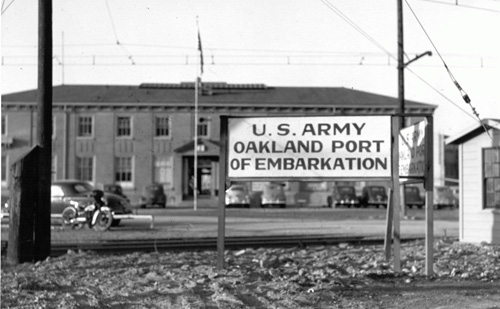
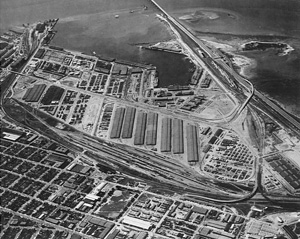
On the Waterfront: An Oral History of Richmond, California, is a collection of 18 oral history volumes based on interviews with 20 Bay Area residents. They include members of early Richmond families, black and white, World War II Kaiser Shipyard workers recruited from the South and Midwest, cannery workers, fishermen, and whalers. Interviews with longtime Richmond residents and new arrivals during the wartime boom document the transformation of this small working-class town during World War II. For related oral histories, please see Rosie the Riveter/World War II American Homefront Oral History Project.

See all interviews

Rosie the Riveter/World War II American Home Front

In collaboration with the National Park Service and the City of Richmond, the Oral History Center conducted over 250 interviews focusing on the World War II Home Front experience. Starting with over one hundred interviews focused on the home front experiences in the Bay Area, we focused on why people from different backgrounds came to the Bay Area, what they did when they arrived, and what they learned from the fluidity and flux of wartime life that affected decisions they made after the war ended. What did women learn about the relationships between work and family life? How did attitudes change toward education? How did war affect race relations and reshape civil rights struggles? Did new ideas about sexuality take root, and if so, why and where? What happened to entertainment? To what degree did religious organizations provide people with a new sense of community? Oral histories collected are used in the National Park Service’s Visitor Education Center at the Rosie the Riveter/World War II Homefront National Historic Park and the Bancroft Library and available online below in transcript — and when possible — with videos synced to transcripts.

See all interviews

Project resources

Video excerpts


Related themes

Related resources

Rosie the Riveter WWII Home Front National Historical Park

Rosie the Riveter Trust

Rosie the Riveter Revisited, Cal State University, Long Beach

Marion and Herb Sandler

The Marion and Herbert Sandler oral history project documents the intertwined lives of the Sandlers through their shared pursuits in raising a family, serving as co-CEOs for the savings and loan Golden West Financial, and establishing a remarkably influential philanthropy in the Sandler Foundation. This project consists of eighteen unique oral history interviews, at the center of which is a 24-hour life history interview with Herb Sandler. All project interviews were conducted by Martin Meeker between January 2017 and July 2018.

Marion Osher Sandler was born October 17, 1930, in Biddeford, Maine, to Samuel and Leah Osher. She was the youngest of five children; all of her siblings were brothers and all went on to distinguished careers in medicine and business. She attended Wellesley as an undergraduate where she was elected into Phi Beta Kappa. She took a job on Wall Street, in the process becoming only the second woman on Wall Street to hold a non-clerical position. She started with Dominick & Dominick in its executive training program and then moved to Oppenheimer and Company where she worked as a highly respected analyst. While building an impressive career on Wall Street, she earned her MBA at New York University. Herbert Sandler is an American philanthropist and businessman. Sandler was born in New York City in 1931 and was raised in Manhattan’s Lower East Side neighborhood. He graduated from the City College of New York in 1951 and from the Columbia School of Law in 1954. He worked as an attorney in private practice and for the Waterfront Commission of New York Harbor. Sandler met Marion Osher in 1960 and they wed in 1961. Herb and Marion Sandler moved to California in 1962 in order to purchase a small savings and loan institution. The Sandlers both served as CEOs of the institution, which was named Golden West Financial Corporation. The operating subsidiary was named Golden West Savings and later renamed to World Savings. The Sandlers sold Golden West in 2006 as they had been devoting more of their time to philanthropy. Through the Sandler Foundation, the Sandlers invested heavily in many existing organizations, such as the American Civil Liberties Union, and founded several others, including ProPublica and the Center for American Progress.

In these oral history interviews, the narrators discuss the following topics, among many others: Sandler and Osher family background and upbringing; education and law school; the life and work of Marion Osher Sander; the practice of law in New York City; the purchase, expansion, culture, business model, and governance of Golden West Financial; the Savings and Loan Crisis of the 1980s; the financial crisis of the 2000s; and the establishment, administration, interests, and leadership of the Sandler Foundation; key receipients of support, including: American Civil Liberties Union, University of California San Francisco, ProPublica, Center for American Progress, Center for Responsible Lending, Human Rights Watch, and more.

See all interviews

Sierra Club

About the project

In 1970, shortly after the first Earth Day, a collaboration arose between the Sierra Club, one of the oldest and most influential environmental organizations in the United States, and the Oral History Center of The Bancroft Library, one of the oldest organizations professionally recording and preserving oral history interviews. Over the past half-century, this ongoing collaboration has produced an unprecedented testimony of engagement in and on behalf of the environment as experienced by individual members and leaders of Sierra Club. 

Sierra Club volunteers helped conduct several interviews in the Sierra Club Oral History Project. But then, as now, extensive and deeply researched oral history interviews with legendary Sierra Club leaders—like photographer and former director Ansel Adams, longtime directors and former Club presidents like Dr. Edgar Wayburn, or former executive directors like David Brower—are conducted on a professional basis through the Oral History Center by oral historians with expertise in environmental history.

The Sierra Club Oral History Project has documented the leadership, programs, strategies, and ideals of both the national Sierra Club and the Club's grassroots at regional and chapter levels for much of the mid-twentieth through the early-twenty-first centuries. These interviews highlight the breadth, depth, and significance of the Sierra Club's eclectic environmental efforts—from education to litigation to legislative lobbying; from wilderness preservation to energy policy to environmental justice; from outdoor adventures to climate change activism to controlling chemicals; from California to the Carolinas to Alaska and beyond to international realms. The Sierra Club Oral History Project, together with the sizable archive of Sierra Club papers and photographs in The Bancroft Library, offers an extraordinary lens on the evolution of environmental issues and activism over the past century, as well as the motivations, conflicts, and triumphs of individuals who helped direct that evolution.

We are grateful and excited to conduct new oral histories with leaders of the Sierra Club, one of the most significant environmental organizations in history. And we deeply appreciate the narrators who share their meaningful memories of protecting the planet for all of us to explore and enjoy

See all interviews

Project resources

The Sierra Club

The Sierra Club Foundation

Sierra Club Women Bibliography

William E. Colby Sierra Club Library

Project history

In May 1970, the Sierra Club board of directors established a standing Sierra Club History Committee, with Marshall Kuhn appointed its founding chairman. Kuhn and his committee turned to Willa Baum, director from 1958 to 1999 of The Bancroft Library's Regional Oral History Office (now the Oral History Center), for advice and training in the art of oral history interviewing. In 1971, trained Sierra Club volunteers from northern and southern California, along with oral history students at the University of California, Berkeley, initiated the Sierra Club Oral History Series by recording reminiscences of early Sierra Club members. In 1974, Ann Lage began coordinating the Sierra Club Oral History Series until her retirement from the Oral History Center in 2011. By the end of the 1970s, the Sierra Club Oral History Series included thirty-five volunteer-conducted interviews, and the Oral History Center had conducted or was completing five extensive oral history interviews with Sierra Club leaders. In 1980, with considerable support from the Oral History Center, the Sierra Club earned a sizeable grant from the National Endowment for the Humanities (NEH) to thoroughly document the Sierra Club of the 1960s and 1970s. Between 1980 and 1984, the NEH grant and matching funds from the Sierra Club Foundation made possible the completion of seventeen professionally conducted oral histories and forty-four volunteer-conducted interviews, totaling over 250 hours of recorded history. Between 1984 and 2019, trained Sierra Club volunteers contributed to The Bancroft Library eight new oral history interviews, resulting in two multi-volume collections published respectively in 1989 and 1996. Between 1992 and 1999, the Oral History Center conducted eight extensive Sierra Club interviews, three of which featured narrators previously interviewed. And between 1999 and 2018, the Oral History Center completed and published five new interviews for the Sierra Club Oral History Series.

In the Spring of 2018, a renewed collaboration between the Sierra Club and the Oral History Center restored life to the Sierra Club Oral History Series. Since the bulk of Sierra Club oral histories conducted in the late 1970s and early 1980s, the Sierra Club, the nature of environmentalism, and the natural environment itself all experienced significant changes. In an effort to address those changes while complementing prior Sierra Club oral histories, our renewed collaboration features long-form interviews with former presidents of the Sierra Club. Roger Eardley-Pryor, an interviewer with the Oral History Center with expertise in science and environmental activism, conducts these new interviews for the Sierra Club Oral History Series.

Law Clerks of Chief Justice Earl Warren

Photo of Chief Justice Earl Warren and his law clerksIn 2004, fifty years after the U.S. Supreme Court's landmark decision in Brown v. Board of Education, UC Berkeley's Regional Oral History Office launched a project to document the experiences of law clerks of Earl Warren, Chief Justice of the Supreme Court of the United States. The project recorded video oral history interviews with all those surviving who clerked for the Chief Justice from the time he was appointed by President Eisenhower in 1953 until his retirement from the bench in 1969. These oral history transcripts are now available online. Two clerks were interviewed by ROHO in the 1970s as part of a multi-interview volume of edited transcripts, Earl Warren: The Chief Justiceship. That volume formed a small part of Earl Warren in California, a substantial oral history project centered on the Warren gubernatorial era in California, for which the Chief Justice himself was interviewed the year before his death.

This project records oral history interviews with all those who clerked for the Chief Justice from the time he was appointed by President Eisenhower in 1953 until his retirement from the bench in 1969. The Brown decision banning segregation in public schools came in 1954, during his first term. The Warren Court is renowned for its guiding theme of equality before the law and expansion of the judiciary's protection of individual rights.

Clerks of Justice Warren

Out of fifty-one individuals who clerked for the Chief Justice, two were interviewed by the Regional Oral History Office in the 1970s as part of a multi-interview volume of edited transcripts, Earl Warren: The Chief Justiceship. That volume formed a small part of a substantial oral history project centered on the Warren gubernatorial era in California, for which the Chief Justice himself was interviewed the year before his death. The series of interviews adds significantly to the historical record on Warren's legacy.

Each former clerk's interview, conducted in a single-session of about two hours and recorded with digital video, has a strong focus on the yearlong (or, rarely, two-year) term of the Supreme Court clerkship. Discussions also touch on the legacy of the Warren Court, a subject the former clerks are in a unique position to comment upon at some length. The topics explored in interviews include:

  • The transformative nature of the Warren period in constitutional law;
  • Leadership vs. scholarship and the nature of Warren's authority;
  • The role of the associate justices and of the court as a whole;
  • Watershed cases, such as Brown v. Board of Education and Miranda v. Arizona;
  • The role and visibility of law clerks;
  • The legacy and the evolution of constitutional law since the Warren Court;
  • How the experience influenced each former clerk's life and career trajectory.

Project advisors

Professors Jesse Choper, I. Michael Heyman, and Harry Scheiber of Berkeley's Boalt Hall School of Law.

Project staff 

Laura McCreery, Interviewer
Linda Norton, Production Editor
David Dunham, Media and Transcription Coordinator

See all interviews

Related resources

Loyalty Oath Collection

Supreme Court of the United States

Japanese American Confinement Sites

See all interviews

Photo of Japanese Student Club Dormitory Building, 1777 Euclid Avenue Japanese Student Club Dormitory Building, Berkeley, CAThe Japanese American Confinement Sites / World War II American Home Front Oral History Project grew out of our long collaboration with the National Park Service on our broader Rosie the Riveter / World War II Home Front Oral History Project. This new group of oral history interviews was primarily funded by the Japanese American Confinement Sites Grant Program of the National Park Service. These interviews document the experiences of Japanese American students who attended UC Berkeley before or after being incarcerated during WWII. Photo of 1938 UC Berkeley 1938 UC Berkeley Japanese Students Club Basketball Team 1938 UC Berkeley Japanese Students Club Basketball TeamWe also interviewed two Deaf interviewees in American Sign Language. We are also pleased to include donated interviews by the Japanese American Women / Alumnae of UC Berkeley [JAWAUCB], a Cal Band oral history, a life oral history with teacher Janet Daijogo, and related Regional Oral History Office [ROHO] interviews.

Photo of Japanese American Honorary Degree Convocation, December 13, 2009

On December 13, 2009, approximately 500 Japanese Americans whose UC Berkeley educations were interrupted by Executive Order 9066 and their resulting incarceration, received honorary degrees at a special convocation ceremony at UC Berkeley. This highlighted the significant history of Japanese Americans at UC Berkeley prior to World War II, and the significant obstacles and challenges for those whose studies were interrupted by incarceration, as well as the challenge for the entire Japanese American community during WWII.

With this in mind, the Regional Oral History Office applied to the Japanese American Confinement Sites [JACS] Grant Program of the National Park Service to add to our Rosie The Riveter / World War II American Home Front Oral History Project with the National Park Service.

Notice of Instructions to All Persons of Japanese AncestryWe were pleased to receive National Park Service JACS funding to complete oral history interviews with Japanese Americans, primarily those who attended UC Berkeley before--and in some cases after--incarceration during World War II. This coincided with The Bancroft Library's JACS grant to digitize and make available online the library’s extensive Japanese American incarceration materials, which have now become The Japanese American Evacuation and Resettlement Digital Archive. While we had some interviewee leads for this now elderly community, we immediately set about advertising our project on websites, newspapers, newsletters, radio, as well as networking with multiple UC Berkeley alumni organizations to recruit potential interviewees. We also received a donation of records from UC Berkeley's International House, which includes correspondence that fits alongside correspondence of University President Sproul and other university staff and academics who tried to allow for continued studies by Japanese American students, or to negotiate the transfer of students to other universities.

We soon learned that the Japanese American Women / Alumnae of UC Berkeley [JAWAUCB] conducted oral history interviews with individuals whose studies were interrupted by incarceration. From 2007-2011, Joyce Nao Takahashi and Mary Tomita of JAWAUCB headed their program to conduct audio interviews from the community. We met with Joyce and Mary to discuss our efforts, and to ensure their completed interviews could be donated to The Bancroft Library as part of our collection.

Flag of allegiance pledge at Raphael Weill Public School, Geary and Buchanan Streets.We also dialogued with the California Japanese American Alumni Association and other UC Berkeley alumni organizations to connect with living individuals who received honorary degrees in 2009. These efforts led us to a number of inspiring potential interviewees in their 80s and 90s. We informed potential candidates of our process and conducted a number of phone or in-person pre-interviews. From there we determined the best candidates for video recorded oral histories. Our final in-person video recorded oral history interviewees included several groups. As planned, we interviewed Japanese Americans who attended UC Berkeley before or after incarceration. Through colleagues at The Bancroft Library, we also met and interviewed two Deaf Japanese Americans--one who was incarcerated with her entire Deaf family--and one who was adopted by a California School for the Deaf teacher and avoided incarceration. Finally, we interviewed one woman whose family moved to Oklahoma to avoid incarceration, and later migrated during the war to Utah, where she and her family lived not far from Topaz camp where Japanese Americans like her were incarcerated.

Photo of camp signThe majority of interviews were conducted at interviewees' homes or at The Bancroft Library. Most of the interviews were recorded in one or two sessions, ranging from one to four hours in total length. Most interviews included: family history and early years; attending UC Berkeley, especially those whose education was interrupted by incarceration; realities of incarceration for narrators and their families; transfer to universities in the Midwest or East Coast; and realities and challenges of post war re-entry into society. While some answers supported traditional literature on this history, many individual responses challenged the standard narratives, as can often happen with oral histories.

While we wish we had started sooner to more thoroughly document the experiences of Japanese American UC Berkeley students incarcerated during World War II, we are grateful to have found these unique individuals who generously shared their histories with us. This small collection adds to the overall collection of oral history interviews collection by Densho, the California Civil Liberties Public Education Program, and many others, some of which you can find on our Resources page. In coming years, we hope to work with other organizations to make all of the oral history interviews conducted on incarceration and the entire home front World War II experience more accessible, so these voices will continue to speak to scholars and students for centuries to come.

Special thanks

Khwaja Umar Ahmed, Student worker
California Japanese American Alumni Association
David de Lorenzo, American Sign Language interview coordinator and transcript editor
David Dunham, Project Manager and Interviewer
Geoff Froh, Densho
Christine Freeman, Oral history intern
Long Fung, Student worker
Candice Fukumoto, Volunteer Interviewer
Alexandra Hernandez, Assistant Program Manager and Historian, JACS Grant Program, NPS
Tom Ikeda, Densho
Kris Leonardo, Financial Analyst, UC Berkeley Library Business Services
Joe Lurie, International House, UC Berkeley
Kara Miyagishima, Program Manager, JACS Grant Program, NPS
Nichi Bei Foundation
Professor Franklin Odo
Samuel J. Redman, Interviewer, Rearcher, Co-grant author
Elizabeth Sabiniano, Student worker
Theresa Salazar, Curator, The Bancroft Library
Crystal Sasaki, Student worker
Grace Shimizu, Japanese Peruvian Oral History Project
Lu Ann Sleeper, American Sign Language Interviewer
Travis Thompson, Oral history intern
Wesley Ueunten, Asian American Studies, San Francisco State University
Mark Westlye, Oral history intern

Acknowledgments

This material is based upon work assisted by a grant from the U.S. Department of the Interior, National Park Service. Any opinions, findings, and conclusions or recommendations expressed in this material are those of the author(s) and do not necessarily reflect the views of the U.S. Department of the Interior. This material received Federal financial assistance for the preservation and interpretation of U.S. confinement sites where Japanese Americans were detained during World War II.

Under Title VI of the Civil Rights Act of 1964, Section 504 of the Rehabilitation Act of 1973, and the Age Discrimination Act of 1975, as amended, the U.S. Department of the Interior prohibits discrimination on the basis of race, color, national origin, disability or age in its federally funded assisted projects. If you believe you have been discriminated against in any program, activity, or facility as described above, or if you desire further information, please write to:

Logo of the National Park ServiceOffice of Equal Opportunity
National Park Service
1201 Eye Street, NW (2740)
Washington, DC 20005

Related resources

California Civil Liberties Public Education Program [CCLPEP]

Densho

Japanese American Citizens League

Japanese American Confinement Sites Grant Program [National Park Service]

Japanese Evacuation and Resettlement: A Digital Archive [The Bancroft Library]

Japanese American Internment and Relocation Records in the National Archives

Japanese American National Museum

Japanese American History Digitization Project [CSU Fullerton]

Japanese American Relocation Digital Archives [JARDA, The Bancroft Library]

Japanese American Resources Guide [Tufts University]

Japanese American Women / Alumnae of UC Berkeley [JAWAUCB]

Japanese Peruvian Oral History Project (JPOHP)

Manzanar National Historic Site [National Park Service]

Military Intelligence School Historic Learning Center [NJAHS]

National Archives

National Japanese American Historical Society [NJAHS]

Nichei Bei Foundation

Telling Their Stories by Urban School of San Francisco

Jewish Community Federation Leadership

The Jewish Community Federation Leadership Oral History Project was initiated in 1990 with the sponsorship of the Jewish Community Endowment Fund to record the recent history of the Jewish Community Federation. Through oral histories with living past presidents and executive directors of the Federation, the project documents Jewish philanthropy in the West Bay as spearheaded by the Federation during the past half-century.

See all interviews

San Francisco Museum of Modern Art

The Oral History Center of the Bancroft Library, UC Berkeley has partnered with the San Francisco Museum of Modern Art to document the history of the museum on the occasion of its 75th anniversary in 2010. Founded in 1935, SFMOMA was the first museum on the West Coast devoted to exhibiting and collecting work by both modern masters and younger, less-established artists.

Fifty-four interviews with directors past and present, curators, board members, collectors, dealers, artists, and museum staff document the museum’s history, with an emphasis on three pivotal questions:

  • How has the museum reached out to the community as it has grown and as San Francisco and the world have changed since 1935?
  • How did the collection develop over the last 75 years?
  • How has the museum defined its priorities for collecting and presenting new work?

Major developments at SFMOMA have involved a collaboration of individuals who have varied relationships to the museum, the art world, and the community. These interviews provide wide-ranging perspectives on the push and pull that results in the growth of an institution, and in the shaping of its identity and mission in a changing world.

Project interviewers (2006-2009)

Richard Cándida Smith, Jess Rigelhaupt, Elizabeth Castle, and Lisa Rubens 

Project funding

The SFMOMA Oral History Project was a collaboration of the San Francisco Museum of Modern Art and the Oral History Center, The Bancroft Library, University of California, Berkeley. Generous support has been provided by the Koret Foundation. Additional support was provided by Elaine McKeon, Dan Volkmann, The Graue Family Foundation, and Martha and Bruce Atwater.

See all interviews

Related resources

San Francisco Museum of Modern Art

Smithsonian Archives of American Art Oral History Collection

The Museum of Modern Art Oral Histories

The Getty Research Institute