
Melissa Cooper
Melissa Cooper
Other directories
Sarah Rosenkrantz
Sarah Rosenkrantz
Other directories
Jennifer Arellano
Jennifer Arellano
(She/her)
Other directories
Oliver Murray
Oliver Murray
(They/them)
Other directories
Setsuko Katsuki
Setsuko Katsuki
Other directories
Jessica Tai
Jessica Tai
(Pronouns/she/hers)
Other directories
Michele McKenzie
Michele McKenzie
(She/her)
Other directories
San Francisco Opera
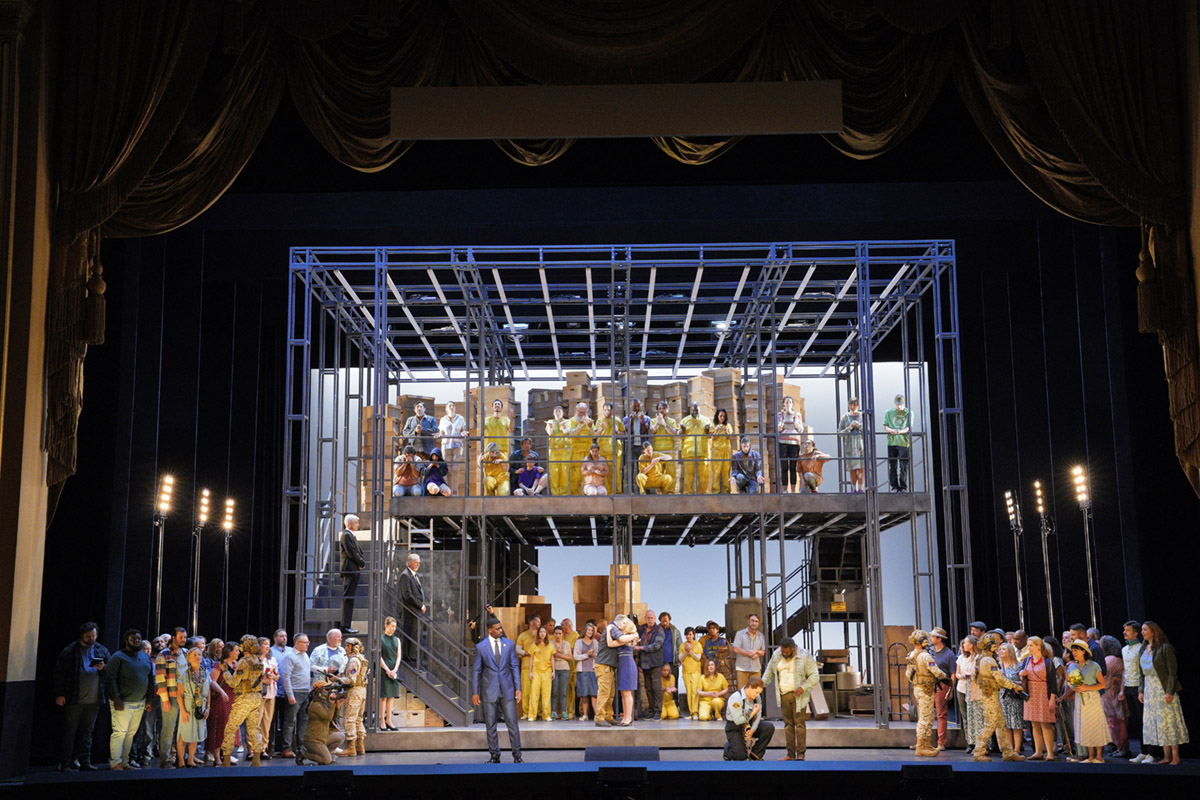
This San Francisco Opera Company oral history project explores the history of the Company through the experiences and perspectives of its general directors, performers, musicians, administrators, and board members. In 1999, Oral History Center interviewer Caroline Crawford conducted an oral history with tenor, voice teacher, and impresario James Schwabacher, whose relationship with San Francisco Opera went back to the 1940s! In 1973, interviewer Suzanne Reiss sat down for interviews with Julian Bagley, who met H.G. Wells and Marian Anderson during his forty years working at the War Memorial Opera House from its opening in 1932! This oral history project began in the 1980s with a three-volume oral history with Kurt Herbert Adler, who led the Opera from 1953 until 1981, and those who knew and worked with him.
In the 2000s, OHC interviewer Caroline Crawford conducted a number of interviews documenting the conception, creation, planning, management, rehearsal, and performance of an opera commissioned by the Company, John Adams’ Doctor Atomic. For the oral history project Doctor Atomic: The Making of an American Opera, Crawford interviewed composer John Adams, general director of the San Francisco Opera Pamela Rosenberg, music director Sir Donald Runnicles, who conducted the world premiere, music administrator Clifford “Kip” Cranna, and chorus director Ian Robertson. In 2011, Crawford created an oral history with star mezzo-soprano Frederica “Flicka” von Stade, exploring in depth a career in opera performance.
In 2018, we undertook new oral histories, with dramaturg emeritus Kip Cranna’s oral history, this time to capture his long career with the opera as a music scholar/ administrator and dramaturg, including his familiarity with the tenures of general directors Kurt Herbert Adler, Terence McEwen, Lotfi Mansouri, Pamela Rosenberg, and David Gockley. The oral history with general director David Gockley (2006-16) showcased his transformative promotion of “American music theater” that he had pioneered at the Houston Grand Opera. The oral history with general director Pamela Rosenberg (2001-2006), Gockley’s predecessor, brought a European sensibility and enthusiasm for adventurous productions to San Francisco despite the impact of 9/11 and the dot-com recession. The Oral History Center also explored the intersection of the San Francisco Opera with the broader community in an interview with Opera Board member Sylvia Lindsey. She was asked to join the Opera Board in 1987, and since then has been a vital force in bringing young people to the opera, while fostering inclusion and belonging among the staff and visiting musicians and performers, long before these terms came to stand for common institutional practices.
- Clifford Cranna: Music and Administration at the San Francisco Opera, 1979-2019
- David Gockley: Cultivating New American Opera in Houston and San Francisco, 1972–2016
- Sylvia Lindsey: A Life in Service to Youth and the Performing Arts
- Pamela Rosenberg: Arts Administration at the San Francisco Opera, the Berlin Philharmonic, and Beyond
Related resources
- Kurt H. Adler: Kurt Herbert Adler and the San Francisco Opera, Volumes I-III
- Julian Bagley: Welcome to the San Francisco Opera House
- Doctor Atomic: The Making of an American Opera
- James H. Schwabacher: Renaissance Man of Bay Area Music: Tenor, Teacher, Administrator, Impresario
- Frederica von Stade: American Star Mezzo-Soprano
Pearl Shen
Pearl Shen
(She/her/they/them)