
S. Huang
S. Huang
Other directories
Ian Frederick-Rothwell
Ian Frederick-Rothwell
Other directories
Charlotte Daugherty
Charlotte Daugherty
Other directories
Elizabeth Semler
Elizabeth Semler
Other directories
Giuliano Sidro
Giuliano Sidro
(He/him)
Other directories
Jason Raitz
Jason Raitz
Other directories
School of Public Health, UC Berkeley
About the project
This set of interviews emerged from an effort to document the recent history and institutional evolution of the UC Berkeley School of Public Health. Steve Shortell, who was dean of the school from 2002 until 2013, wanted to chronicle the foundation and growth of the On-campus/Online Professional MPH (master’s of public health) Program; the reinstitution of the undergraduate major in public health; the development of an office of diversity; a graduate program in public health practice and leadership; and a center for health leadership, formerly known as the Center for Public Health Practice and Leadership and currently known as RISE. He also wanted to feature some key leaders associated with these developments.
There are three interviews with Dean Shortell that provide the context for the institutional changes during this period, as well as explorations of his career in health management research. Executive Associate Dean Thomas Rundall was also interviewed about multiple initiatives, including his leadership of the graduate programs in health management and co-directorship of the Center for Lean Engagement and Research in Healthcare (CLEAR). Jeffrey Oxendine was interviewed about his role as co-founder and associate dean of the Center for Public Health Practice and Leadership, which began in 2008. Another feature of this oral history project was to explore the reinstitution of the undergraduate major in public health in 2003. Dr. Lisa Barcellos was interviewed in part about her leadership of that program and her research on the genetic and environmental factors involved in autoimmune disease.
There is also a set of interviews surrounding the establishment and growth of the online MPH program. Dr. Nap Hosang was the first director of the hybrid master's of public health program, and he discusses the unique features of the program's design, particularly with respect to accessing a diverse and unique pool of student talent, which contributed to the program's success in subsequent years. Dr. Deborah Barnett was interviewed partly about her capacity as the successor and current leader of the program and as chief of curriculum and instruction. Alberta (Abby) Rincón recounted the history of her time as director of diversity and the foundation of the DREAM (Diversity, Respect, Equity, Action, Multiculturalism) office in the school. In her interview, chair of the Division of Community Health Sciences Dr. Denise Herd discusses the history of research in health disparities and the social determinants of health — a subject that is raised in many of the interviews — and her participation in the campus-wide Othering & Belonging Institute. Finally, Dr. Art Reingold was interviewed about his several decades as director of the Division of Epidemiology, the online MPH program, and teaching in the time of COVID.
If the field of public health is broadly defined as the study of health at the population level, this set of interviews reveals the broadest themes of health in context: the environment that shapes the expression of genes, the factors that lead to the nourishment or deprivation of bodies and minds, the factors that determine who gets to study or teach public health, the factors that shape the delivery of health care, and the contexts that shape the interactions between human bodies and other organisms and pathogens. The overarching story is about how these individuals studied, improved, and optimized institutional attention to these larger contexts.
Oral histories online
- Lisa Barcellos
- Deborah Barnett
- Denise Herd
- Nap Hosang
- Jeffrey Oxendine
- Arthur Reingold
- Alberta Rincón
- Thomas Rundall
- Steve Shortell
Library Board
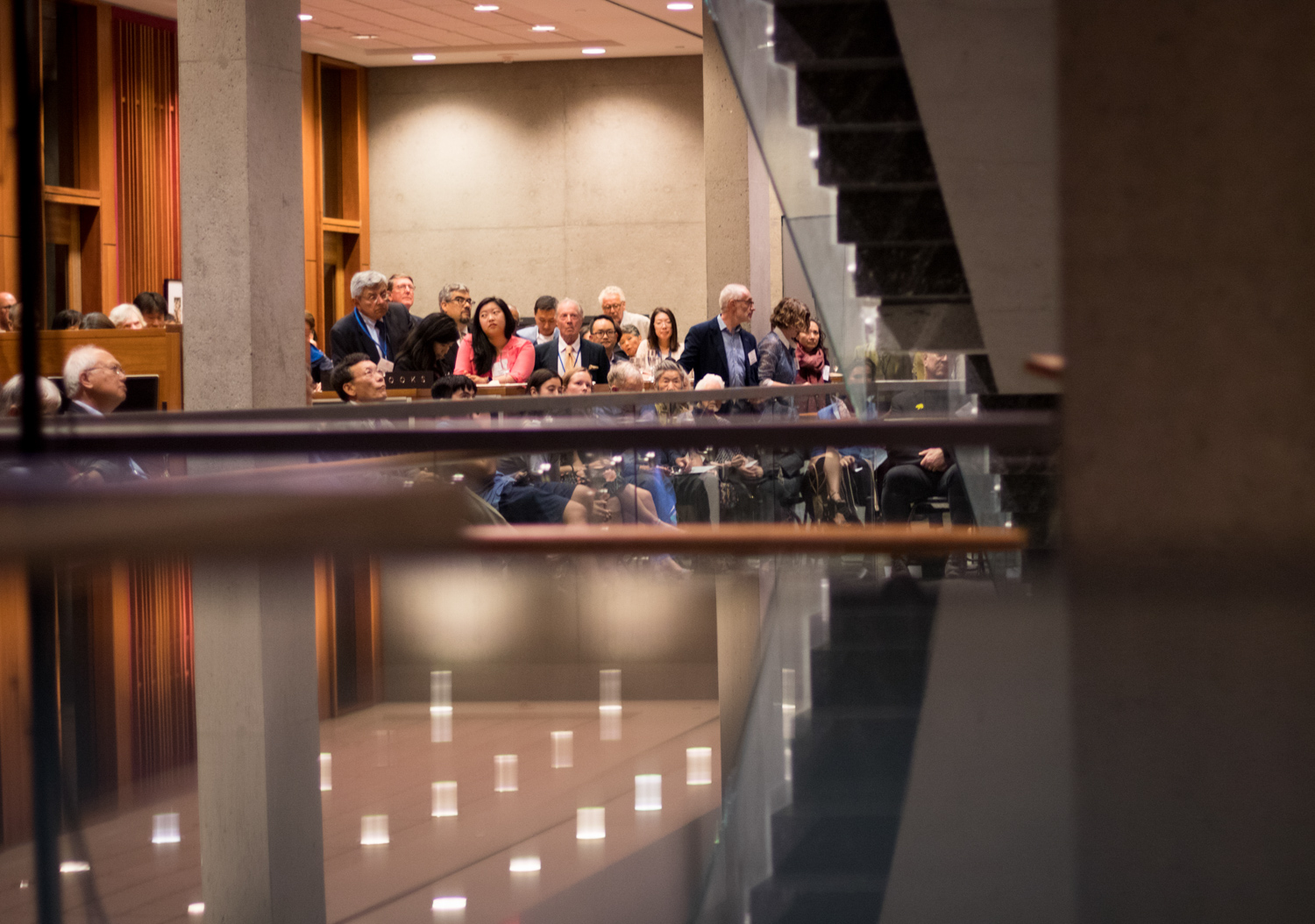
Library Board 2025-26
PRESIDENT
Susan R. Stutzman ’84
MEMBERS
Josefina C. Baltodano
Ray Beeman ’89
Aviva S. Boedecker ’75
Anne-Marie Cordingly ’87
Richard De La Peña J.D. ’76
Kate Donovan, Director of The Bancroft Library & AUL for Special Collections
Francesca M. Eastman
Chase Reynolds Ewald M.J., ’90, Chair, Friends of The Bancroft Library Council
Jeffrey G. Homrig ’95, J.D. ’01
Marily A. Howekamp ’66, Past President
Deborah S. Jordan Ph.D. ’87
Leeron Kalay ’01
Talia Kennedy M.J. ’09
Catherine P. Koshland
Thomas A. Koster M.S. ’71
Christopher F. Lee ’90, M.B.A. ’95
Emily Baker Lohr ’95
Meredith Meade ’93
Jason Morimoto ’02
Peter Muñoz ’68, M.A. ’70, J.D. ’75
Mary M. Myers ’68
Garry I. Parton ’86
Carmen J. Reid ’95
John H. Roberts Ph.D., Chair, Academic Senate Library Committee
Cynthia So Schroeder ’91
Pranjal D. Shah ’01
Rishi N. Sharma ’02, J.D. ’05
Alison Sonsini Buttles ’00
Allen C. Soong M.B.A. ’96
Robert Strand, Ph.D.
Alan Templeton
Matthew D. Thurlow ’02
Eudora N. Ting ’94
Peter D. Tremblay ’84
Peter S. Van Houten ’56, M.A. ’62, Ed.D. ’73
Suzanne Wones, University Librarian
Laura Wen-yu Young ’84, J.D. ’87
JACK ROSSTON SOCIETY MEMBERS
Brad Barber ’68, J.D. ’71
Janice Bea
Paul D. Chapman
Paul Churchill ’82, J.D. ’86
Carol Kavanagh Clarke ’60
Mollie P. Collins ’65, Past President
John F. Cummins
Jason DiNapoli ’90
Charles B. Faulhaber, Director Emeritus, The Bancroft Library
Nancy Foster
Carl Franklin ’71
John B. Gage ’75
Victoria L. George ’78, ’82
Richard Greene ’60, J.D. ’63
Carole Krumland ’67
Thomas C. Leonard Ph.D. ’73, University Librarian Emeritus
Charlene Liebau ’60, Past President
Raymond Lin, M.B.A. ’93, M.A. ’93
John Maccabee
Jeff MacKie-Mason, University Librarian Emeritus
Rita Moreno, Artist Trustee
Susan Morris ’63
Harvey L. Myman ’70, M.J. ’92
Robert G. O’Donnell ’65, ’66
Marie Luise Otto ’59
Michael Robarts ’87
Roger Samuelsen ’58, J.D. ’64
Stephen M. Silberstein ’64, M.L.S. ’77
Camilla M. Smith
Janet Stanford ’59
Miriam D. Starc ’83, J.D. ’86
Megan V. Thygeson ’78
Carol Upshaw ’58
David B. Walrod ’87
Sheryl Wong ’67, ’68, Past President
Lesley G. Yeary ’85
Theo S. Zaninovich ’64
Japanese American Intergenerational Narratives
About the project
After the entrance of the United States into World War II, President Franklin D. Roosevelt signed Executive Order 9066 on February 19, 1942, which mandated the forced removal of Japanese Americans from their homes on the West Coast into incarceration camps inland for the duration of the war. This unjust incarceration uprooted families, disrupted businesses, and dispersed communities—impacting generations of Japanese Americans.
The Japanese American Intergenerational Narratives Oral History Project documents and disseminates the ways in which intergenerational trauma and healing occurred after the United States government's incarceration of Japanese Americans during World War II. These interviews examine and compare how private memory, creative expression, place, and public interpretation intersect at sites of incarceration.
Initial interviews in this project focus on the Manzanar and Topaz prison camps in California and Utah, respectively, and pose a comparison through the lens of place, popular culture, and collective memory. How does memory graft differently on different sites? What gets remembered about these sites, and by whom? How does memory differ across generations? Has interpretive work around these sites provided intergenerational catharsis for families of those incarcerated? Does geography and popular culture matter in the healing process?
Exploring narratives of healing as a through line, these interviews of descendants of World War II incarceration investigate the impact of different types of healing, how this informs collective memory, and how these narratives change across generations.
This oral history project began in 2021 with generous funding from the National Park Service's Japanese American Confinement Sites Grant. Most of the early interviews were conducted remotely via Zoom due to the global COVID-19 pandemic.
Oral histories online
- Miko Charbonneau: Belonging, Storytelling, and Video Game Design
- Hans Goto: A Legacy of Service and Learning
- Patrick Hayashi: From Mail Carrier to Associate President to Artist
- Jean Hibino: Sansei Reflections on Identity, Justice, and Paying It Forward
- Mitchell Higa: Man on a Road
- Roy Hirabayashi: Activism, Taiko, and Asian American Identity
- Carolyn Iyoya Irving: Grateful Daughter, Hopeful Mother, Work in Progress
- Susan Kitazawa: An Intergenerational Legacy of Advocacy
- Naomi Kubota Lee: A Sansei Artist's Journey for Redress
- Ron Kuramoto: Sansei from Los Angeles to Wisconsin
- Jennifer Mariko Neuwalder: Growing Up Post-Incarceration with Complicated Histories and Identities
- Kimi Maru: The Struggle Continues
- Lori Matsumura: Intergenerational Impacts from JapaneseAmerican World War II Prison Camps
- Alan Miyatake: Photography in the Japanese American Community
- Ruth Sasaki: Writer and Storyteller
- Steve Shigeto Sindlinger: Adopted Son Finds His Roots and Family History of Perseverance Through Adversity
- Masako Takahashi: Art, Travel, and Japanese American Identity
- Peggy Takahashi: From Farm Life in Los Angeles to Academia in the Bay Area
- Nancy Ukai: Who Owns Japanese American History?
- Hanako Wakatsuki-Chong: Japanese American Confinement Sites and My National Park Story
- Rev. Michael Yoshii: Faith in the Face of Injustice
Interpretive material
Graphic narrative illustrations
The OHC commissioned artist Emily Ehlen to create ten illustrations based upon stories and themes recorded in the interviews. Ehlen’s artwork can be found on the OHC blog and is available for download for educational purposes. We encourage you to use and share Ehlen’s artwork, especially in classrooms when teaching the history and legacy of the World War II incarceration of Japanese Americans. When using these images, please credit Emily Ehlen as the artist (for example, Fig. 1, Ehlen, Emily, WAVE, digital art, 2023, Oral History Center, The Bancroft Library, University of California, Berkeley), and see the OHC website for more on permissions when using our oral histories. To save a digital copy of any illustration for fair use, right click on the image and select “Save Image As…” The text description that accompanies each illustration aims to provide accessibility for the visually impaired in lieu of alternative text limitations, which does not easily accommodate graphic narrative images.
Podcast
Season 8 of The Berkeley Remix podcast, “‘From Generation to Generation’: The Legacy of Japanese American Incarceration,” features stories of activism, contested memory, identity and belonging, as well as artistic expression and memorialization of incarceration. It was produced by Rose Khor, Roger Eardley-Pryor, Shanna Farrell, and Amanda Tewes, and narrated by Devin Katayama. All four episodes are available on the OHC’s SoundCloud account and in your podcast feeds.
- Episode 1: “‘It’s Happening Now:' Japanese American Activism”
- Episode 2: “‘A Place Like This:’ The Memory of Incarceration”
- Episode 3: “‘Between Worlds:’ Japanese American Identity and Belonging”
- Episode 4: “‘Origami as Metaphor:’ Creative Expression, Memorialization, and Healing”
Related resources
- Bibliography for trauma-informed interviewing
- Japanese American Evacuation and Resettlement Records (BANC MSS 67/14 c) [The Bancroft Library]
- Japanese American Relocation Digital Archive (JARDA)
- Japanese American Confinement Sites Oral History Project [Oral History Center]
- Japanese American Confinement Sites Grant Program [National Park Service]
Acknowledgments
This project was funded, in part, by a grant from the U.S. Department of the Interior, National Park Service, Japanese American Confinement Sites Grant Program. The views and conclusions contained in this document are those of the authors and should not be interpreted as representing the opinions or policies of the U.S. government. Mention of trade names or commercial products does not constitute their endorsement by the U.S. Government.
This material received federal financial assistance for the preservation and interpretation of U.S. confinement sites where Japanese Americans were detained during World War II. Under Title VI of the Civil Rights Act of 1964, Section 504 of the Rehabilitation Act of 1973, and the Age Discrimination Act of 1975, as amended, the U.S. Department of the Interior prohibits discrimination on the basis of race, color, national origin, disability or age in its federally funded assisted projects. If you believe you have been discriminated against in any program, activity, or facility as described above, or if you desire further information, please write to:
Office of Equal Opportunity
National Park Service
1201 Eye Street, NW (2740)
Washington, DC 20005